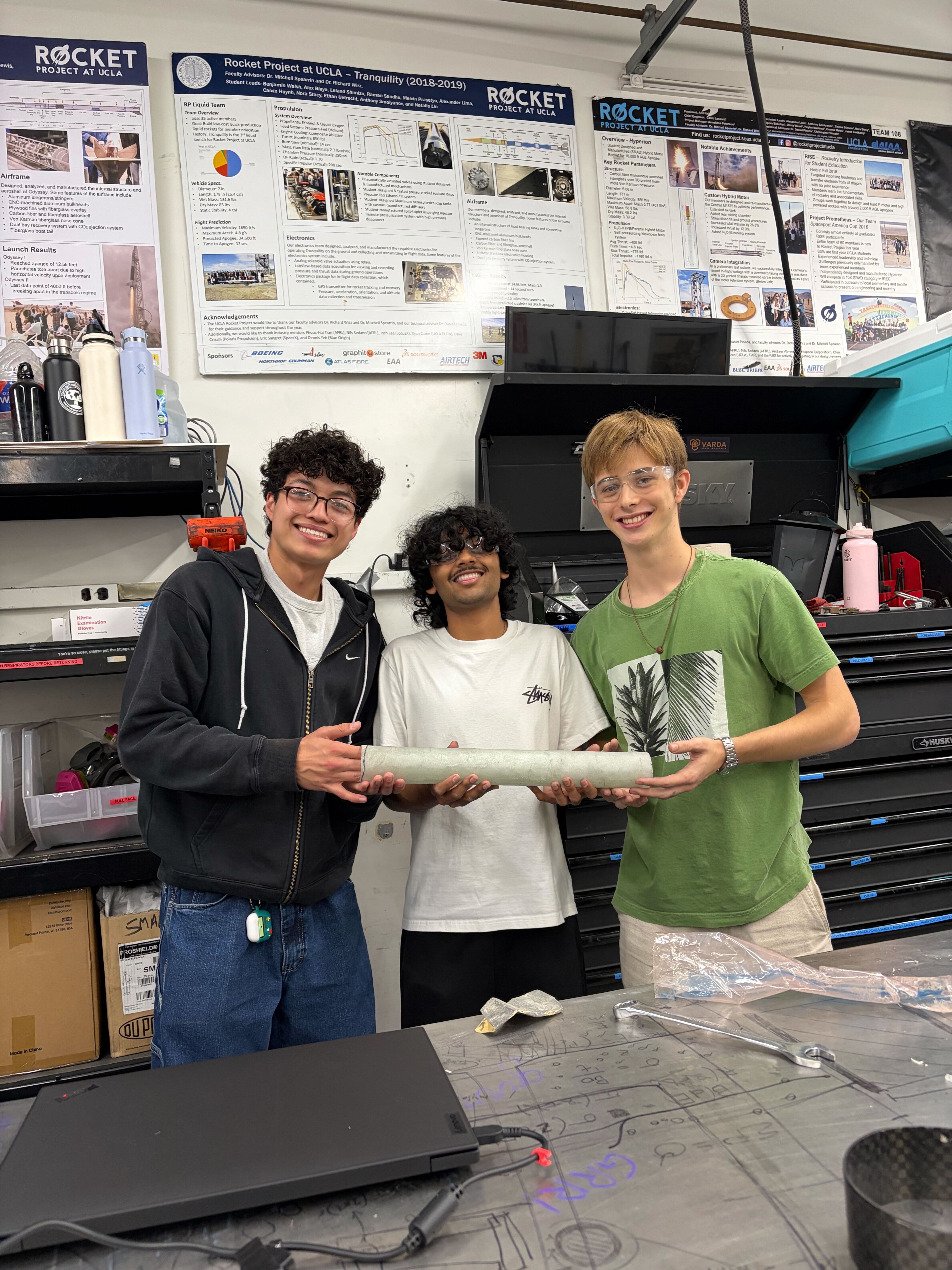

E1RK — UCLA
Group High Powered Rocket
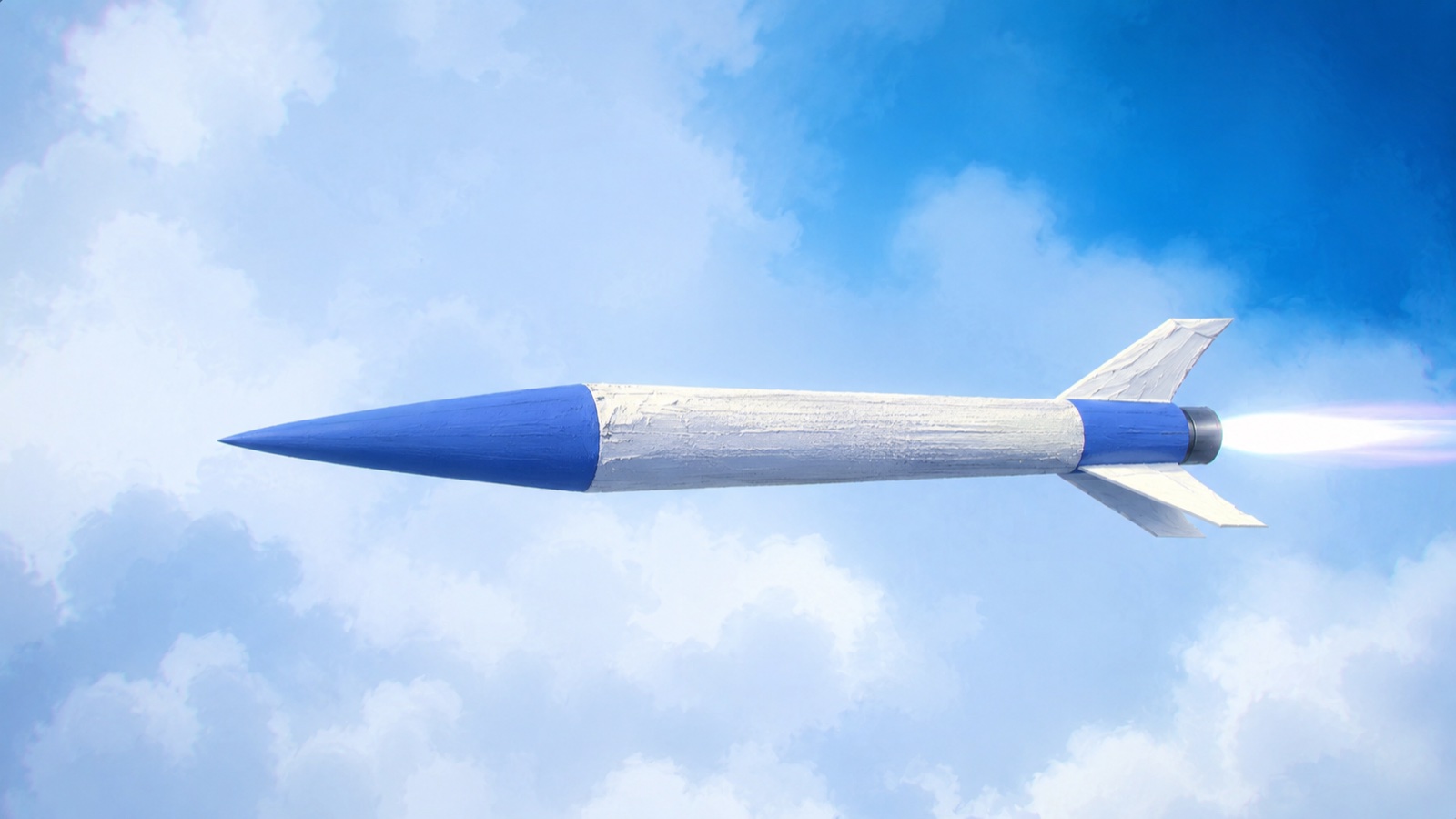
Fiberglass airframe, 3D-printed nose cone & boat tail
Overview
| Course | Engr. 1, Intro. to Rocketry (E1RK) |
| Mentors | Nicholas Veracruz (SpaceX, Relativity) · Caitlyn Hill (SpaceX) |
| Design | SolidWorks · OpenRocket · Theodore von Kármán |
| Build | Fiberglass Layup · FDM · Laser Cut |
| Material | PLA · Fiberglass (body) · Birch (fins) |
| Color | Sky Blue |
Rockets built
Successful launches
Team members
Constraints
Designed to a 3,000 ft apogee with a 1.5 to 2.5 cal stability margin, sub-15.5 sec ascent, and 75+ ft/s off-the-rail velocity, while flying and recovering a raw egg intact and logging in-flight apogee, inertia, and stability data within a ~436 g loaded mass budget.
Approach
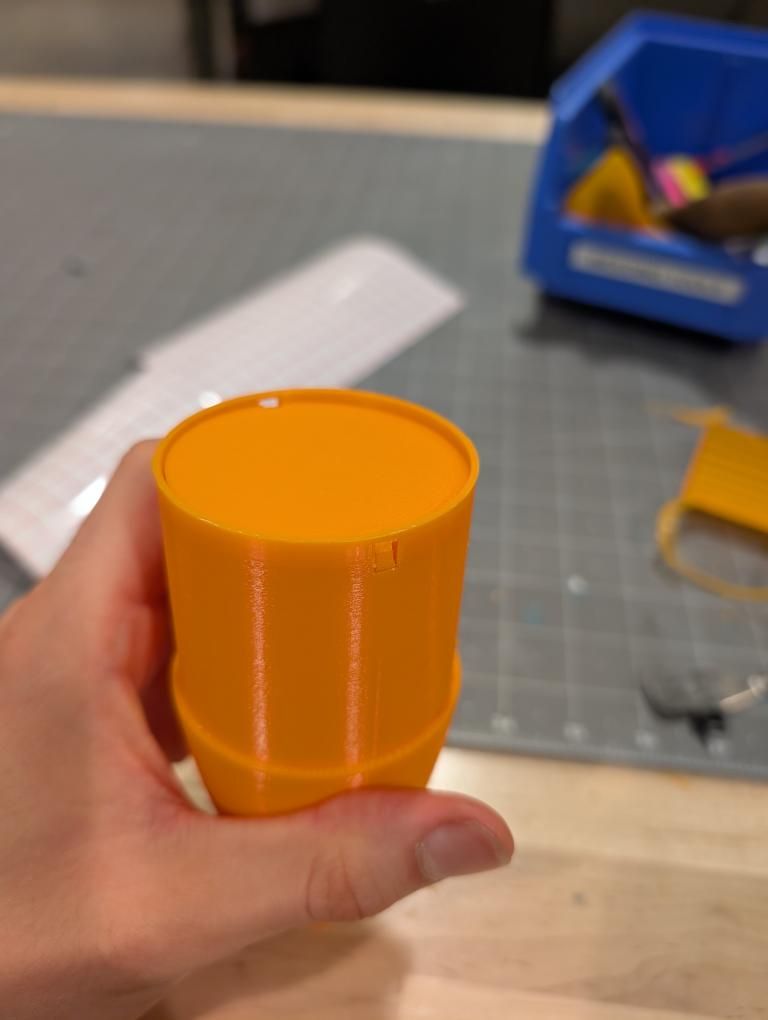
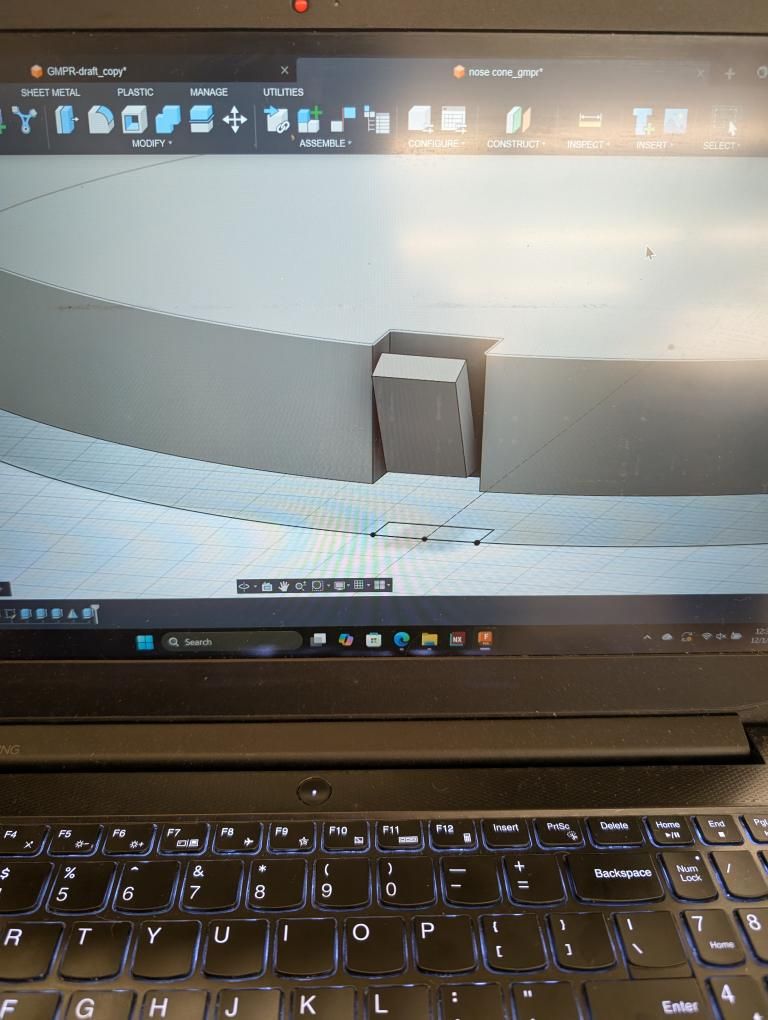
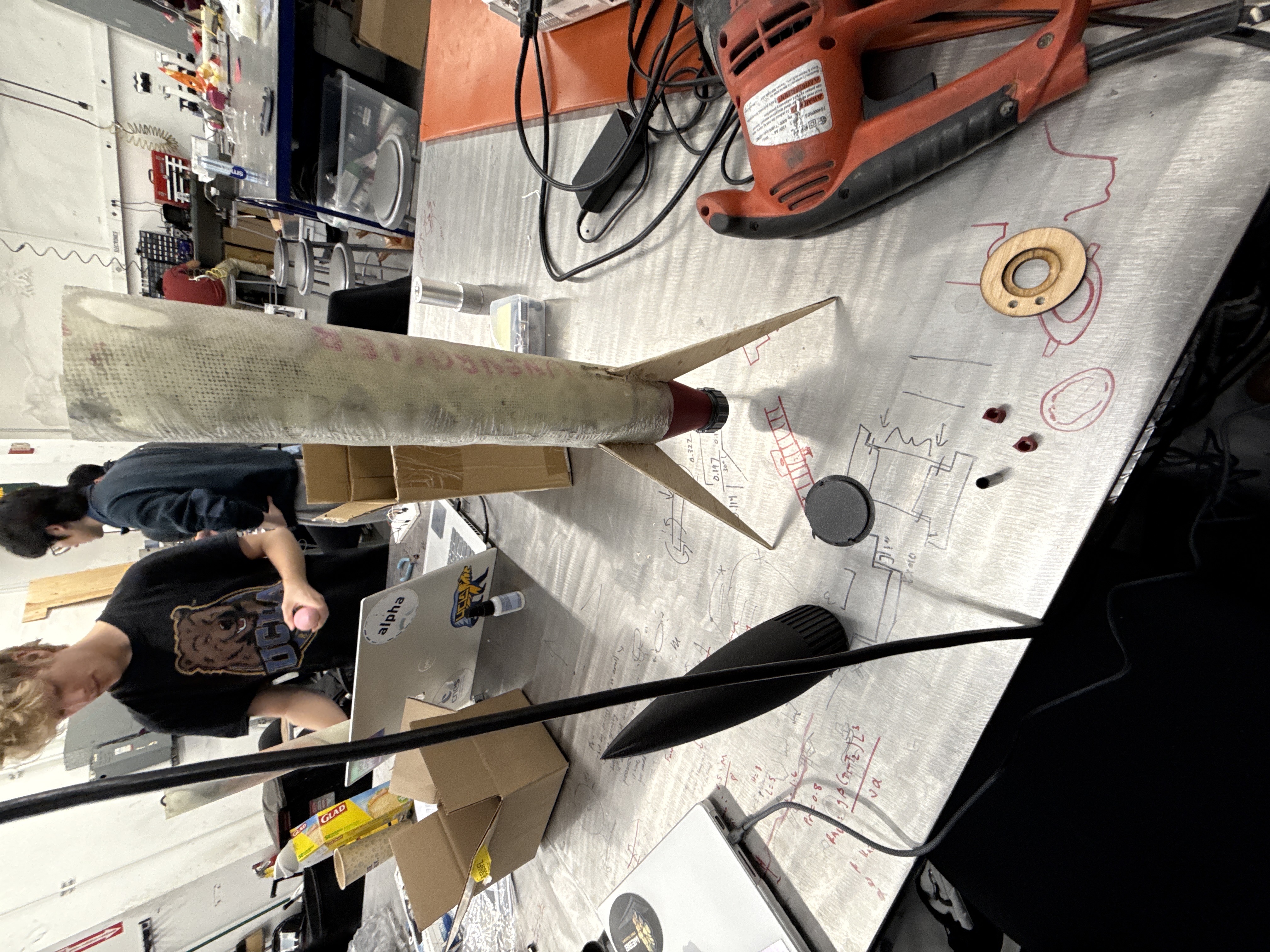
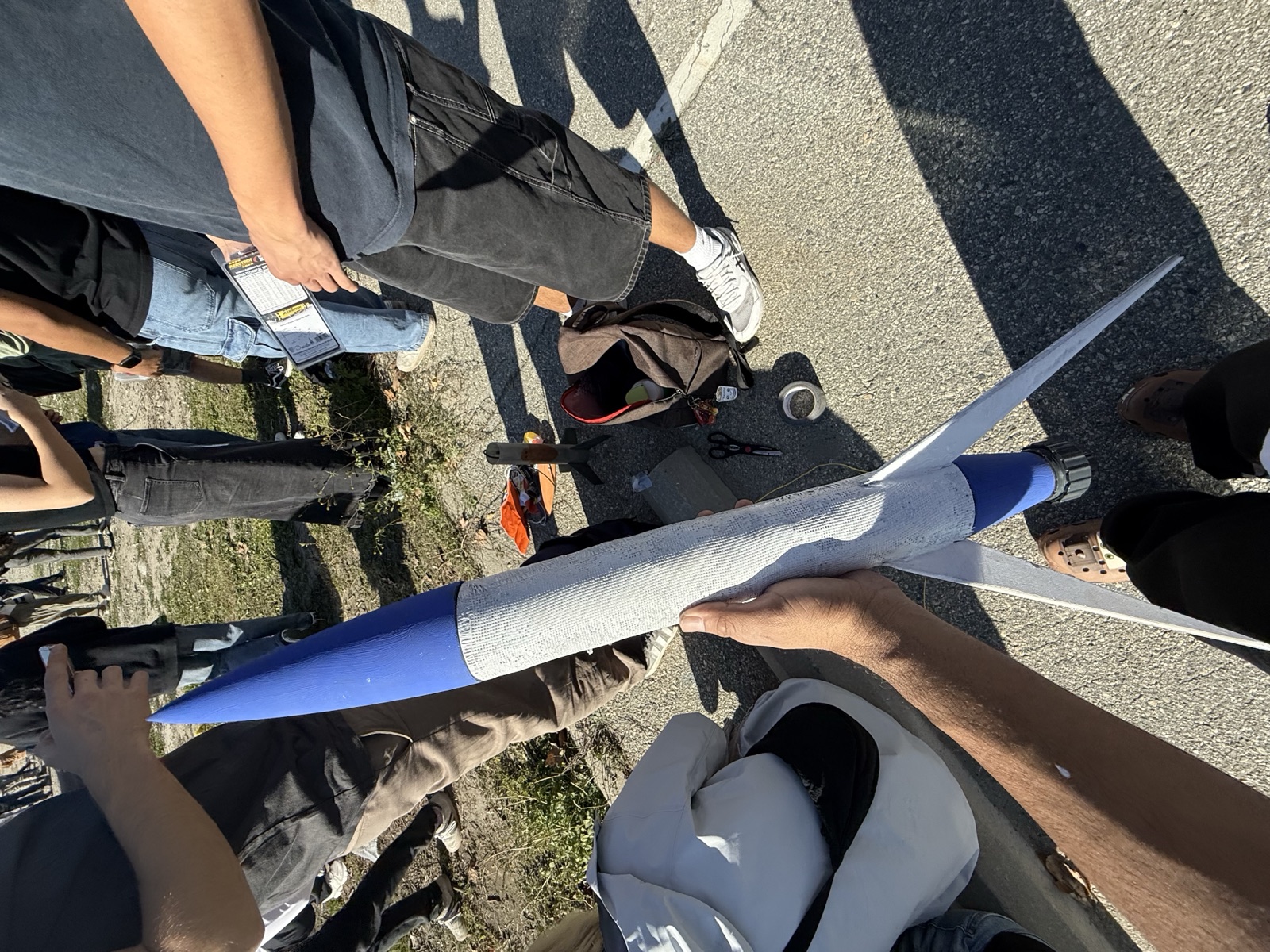
Using OpenRocket and SolidWorks, we chose a Von Karman nose cone for low transonic drag (~Mach 0.7), a fiberglass airframe, and three trapezoidal birch-plywood fins for passive stability. Doubled the nose cone as the payload bay and designed a fastener-free nose cone cap from PLA clips that snap into notches, with fluff for shock isolation.
Build
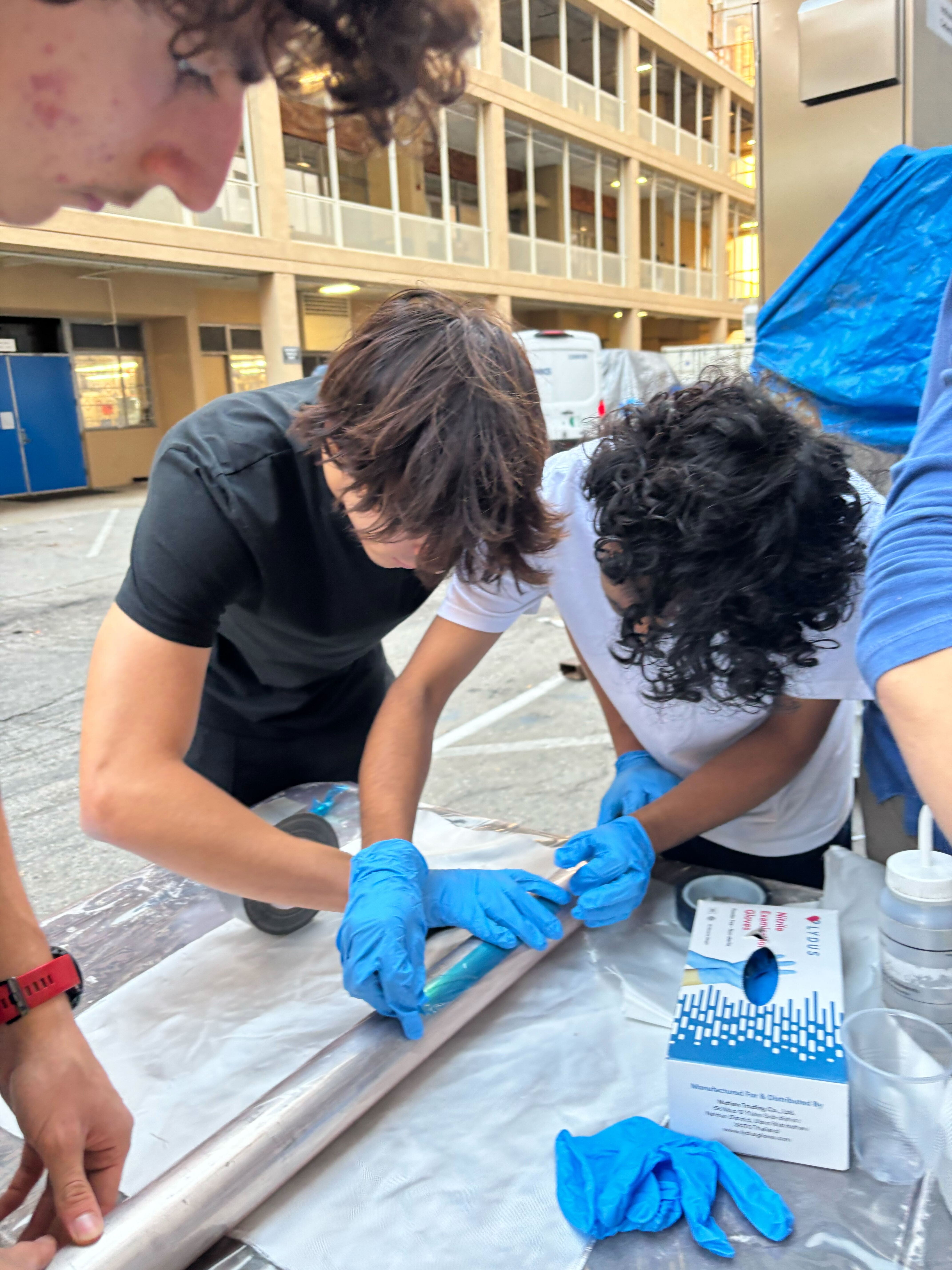
Laid the fiberglass airframe, laser-cut the centering rings, bulkhead, and fin slots, and FDM-printed the nose cone and clip cap in PLA. Iterated the nose cone twice (resized per the OpenRocket optimization, then reprinted after a loose fit) and the retention cap twice more after it spun in its notch and cracked.
Analysis
Modeled the full flight in OpenRocket (237 m/s max velocity, ~Mach 0.7, 133 Ns motor impulse) and ran a stability trade study showing that removing the nose electronics pushed the margin from ~1.45 to 1.34 cal, below the 1.5 cal floor.
Design Review
Result
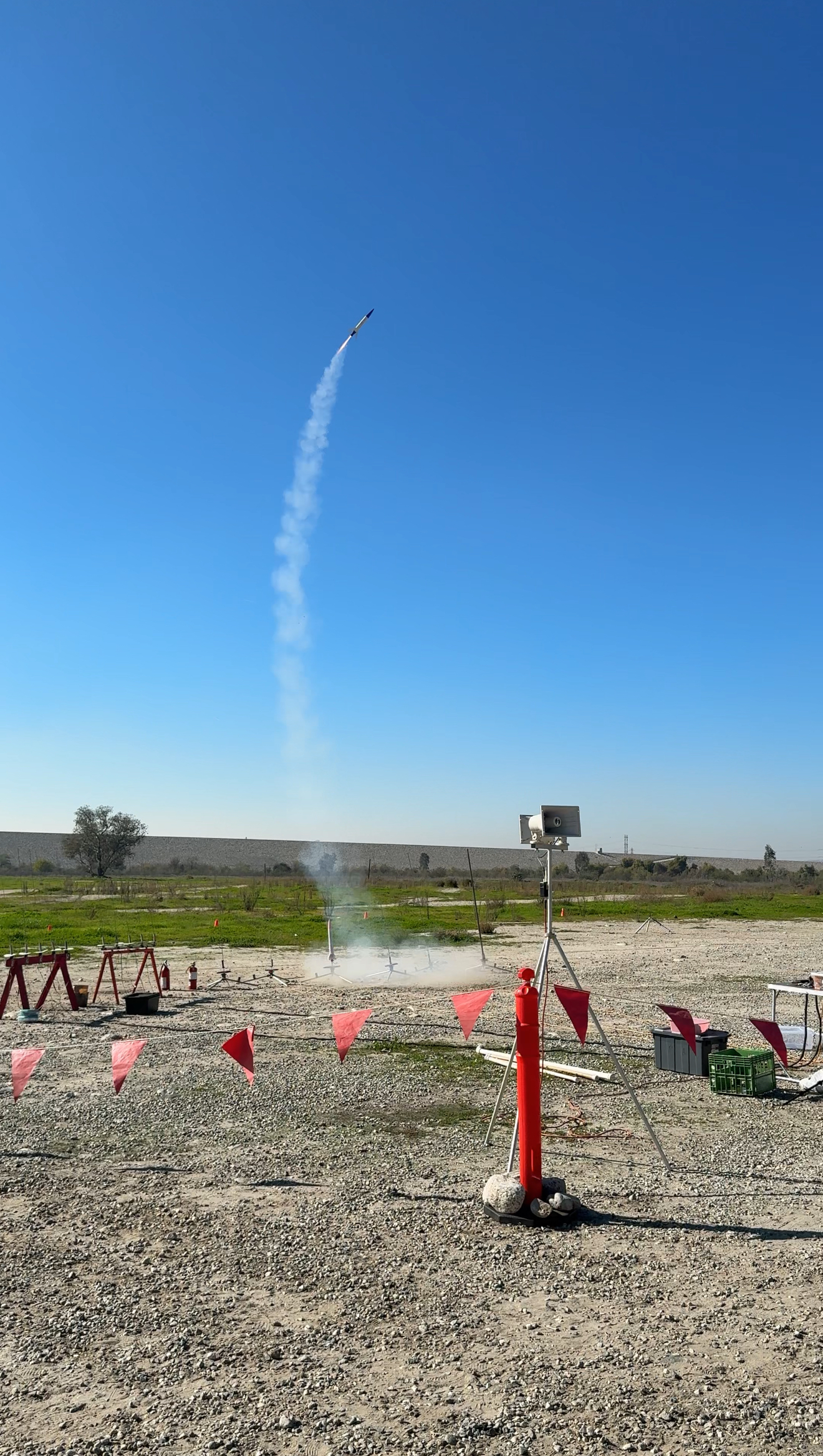
After four ignition attempts caused by a loss of motor continuity, the motor fired and the rocket launched on a slightly angled but straight trajectory. Post-flight, our search failed, leaving recovery and egg condition unconfirmed.
Reflection
With the electronics cut during the build to protect the stability, the apogee logging requirement went unmet. Being on a two-person team (versus the typical five- to six-person team) was a challenge.