
UCLA Rocket Project
Vertical Tank Mount
Oxidizer tank infrastructure for static fire / cold flows
Overview
| Design | SolidWorks |
| Height | 6 ft |
| Width | 13 in |
| Weight | 30 lbm |
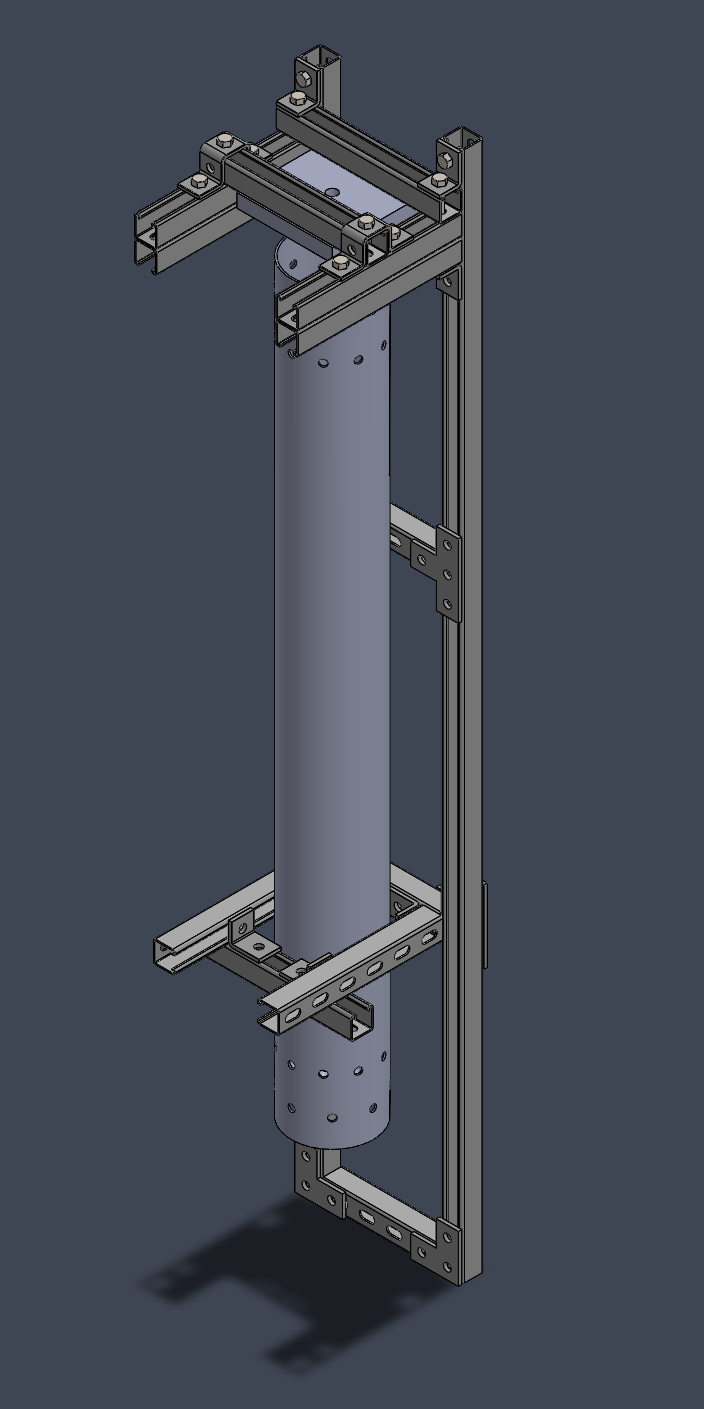
| Structure | Strut Channels & Brackets |
| Configuration | Vertically mounted |
| Main Component | Eye Bolt & Rod |
Factor of Safety (min)
Oxidizer mass
Cumulative strut lengths
Objective
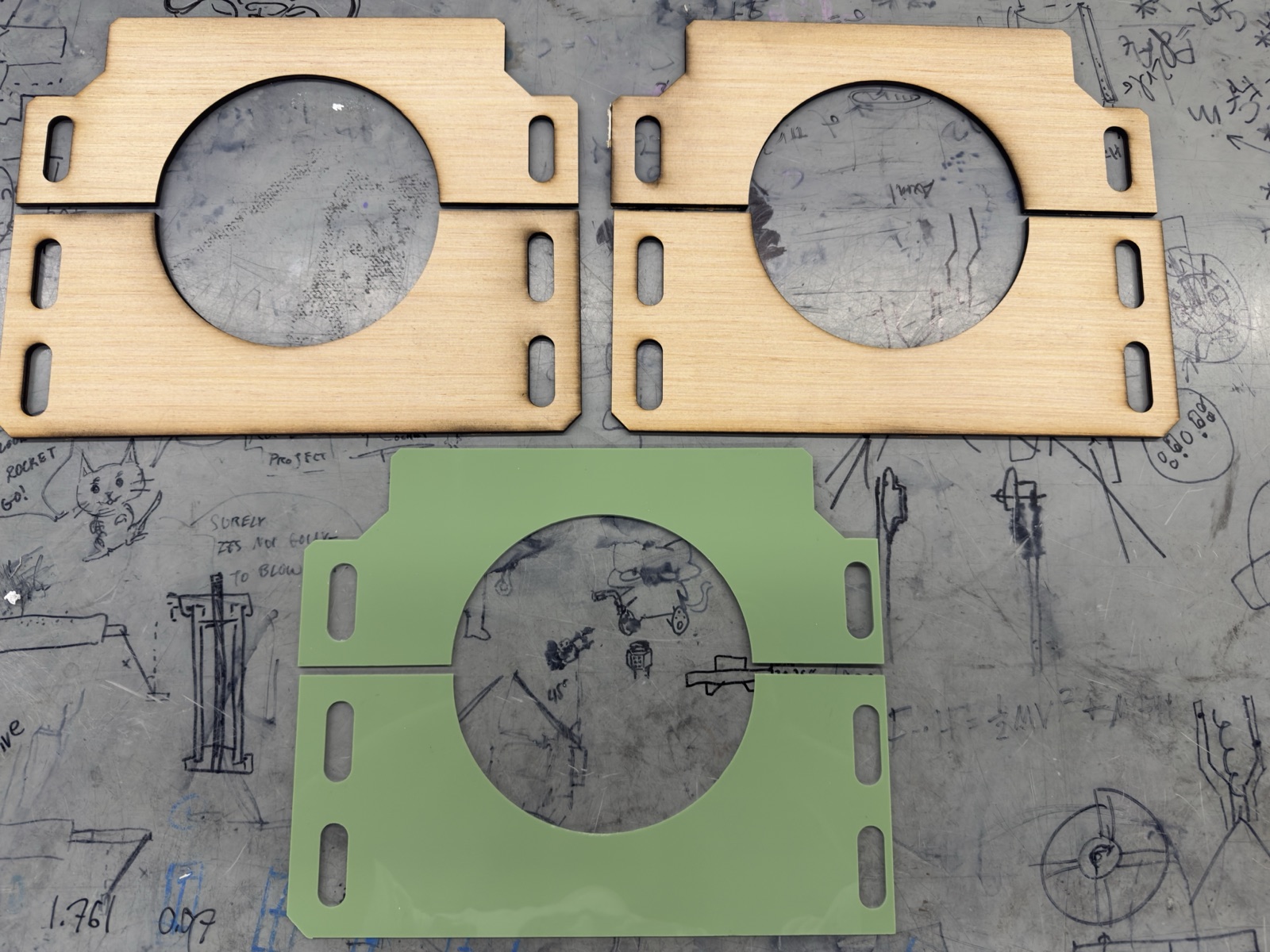
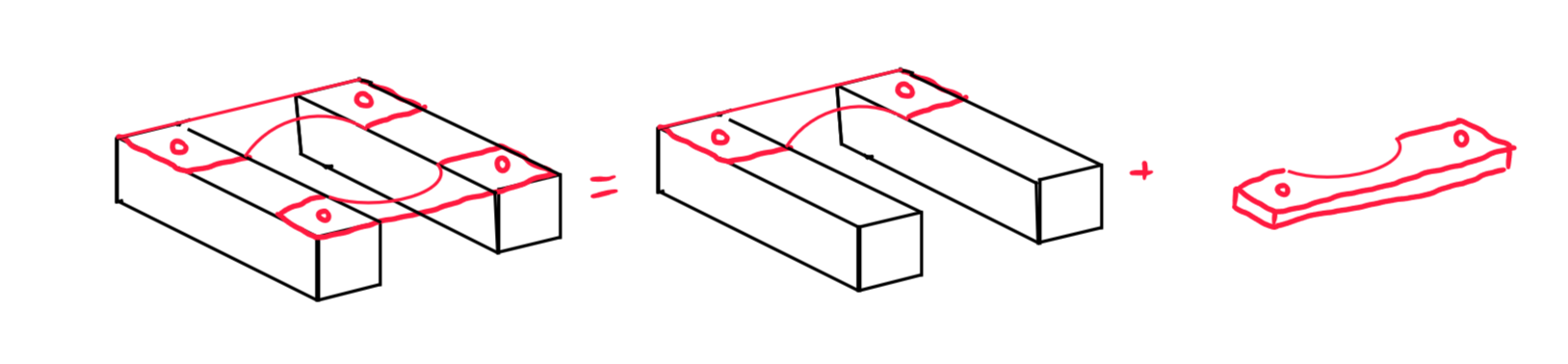
Built a vertical oxidizer tank mount to support a hybrid rocket engine test campaign of 2 cold flows and 3 static fires. The primary measurement requirement was accurate load cell data. This drove the design toward a dual-level restraint (laser cut) geometry to isolate lateral tank motion from load cell inputs. The mount also needed to accommodate a quick-disconnect arm for procedures and install onto an existing test site structure.
Approach
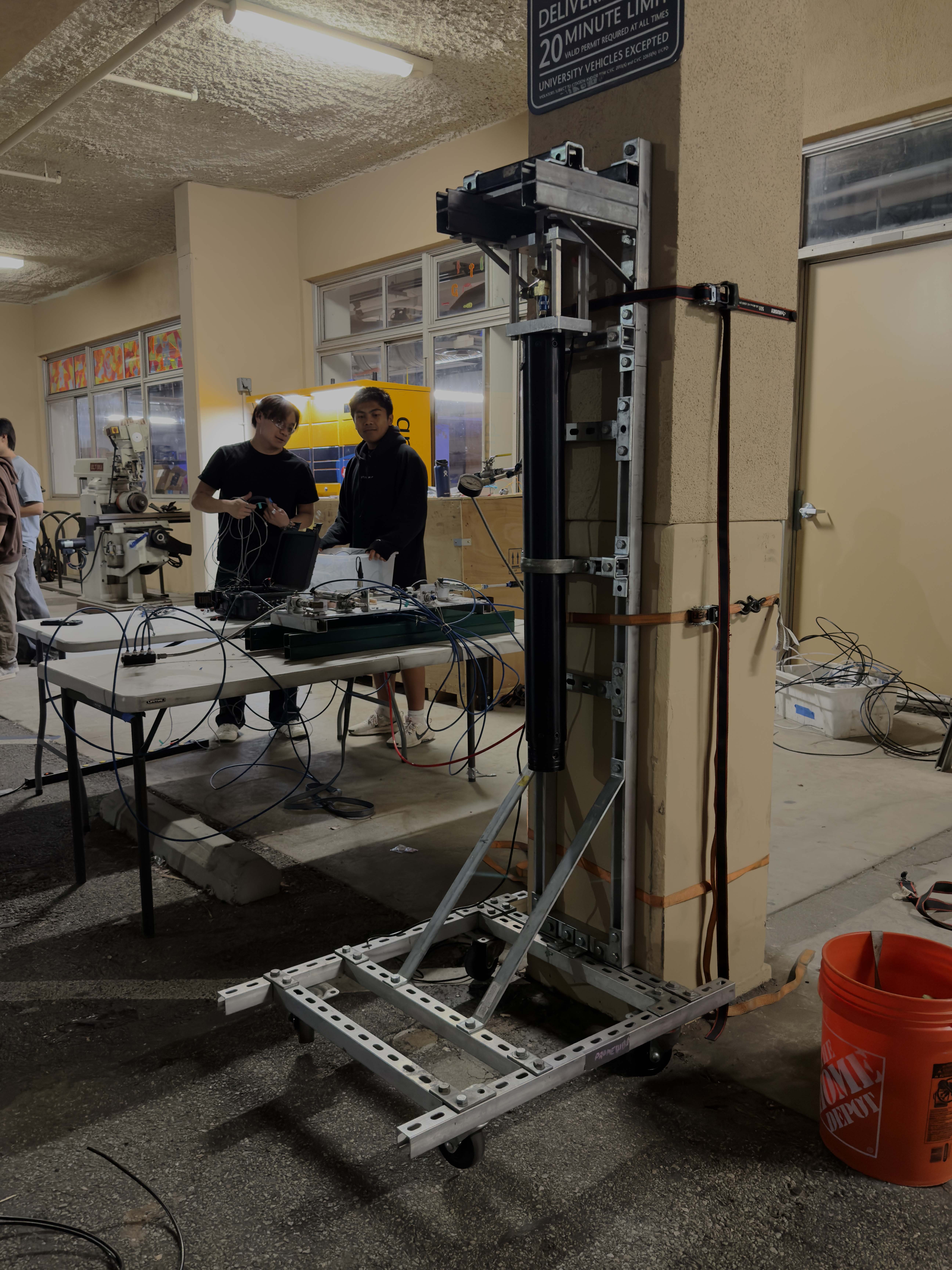
Adapted an existing vertical test stand from a prior COTS rocket motor firing rather than fabricating new primary structure, reusing the base frame to reduce schedule strain. Added two independent levels of tank restraint plates to constrain lateral tank motion. The main mechanism is an eye bolt and a rod that goes through the tank’s skirt. Integrated a quick-disconnect arm at the base of the strut assembly, incorporating it into standard test procedures as a verified checkout item.
Build
The main frame of the tank mount was completed within an hour. I laser-cut the restraint boards and fit-checked them in SolidWorks. The structure was bolted to the test site.
Result
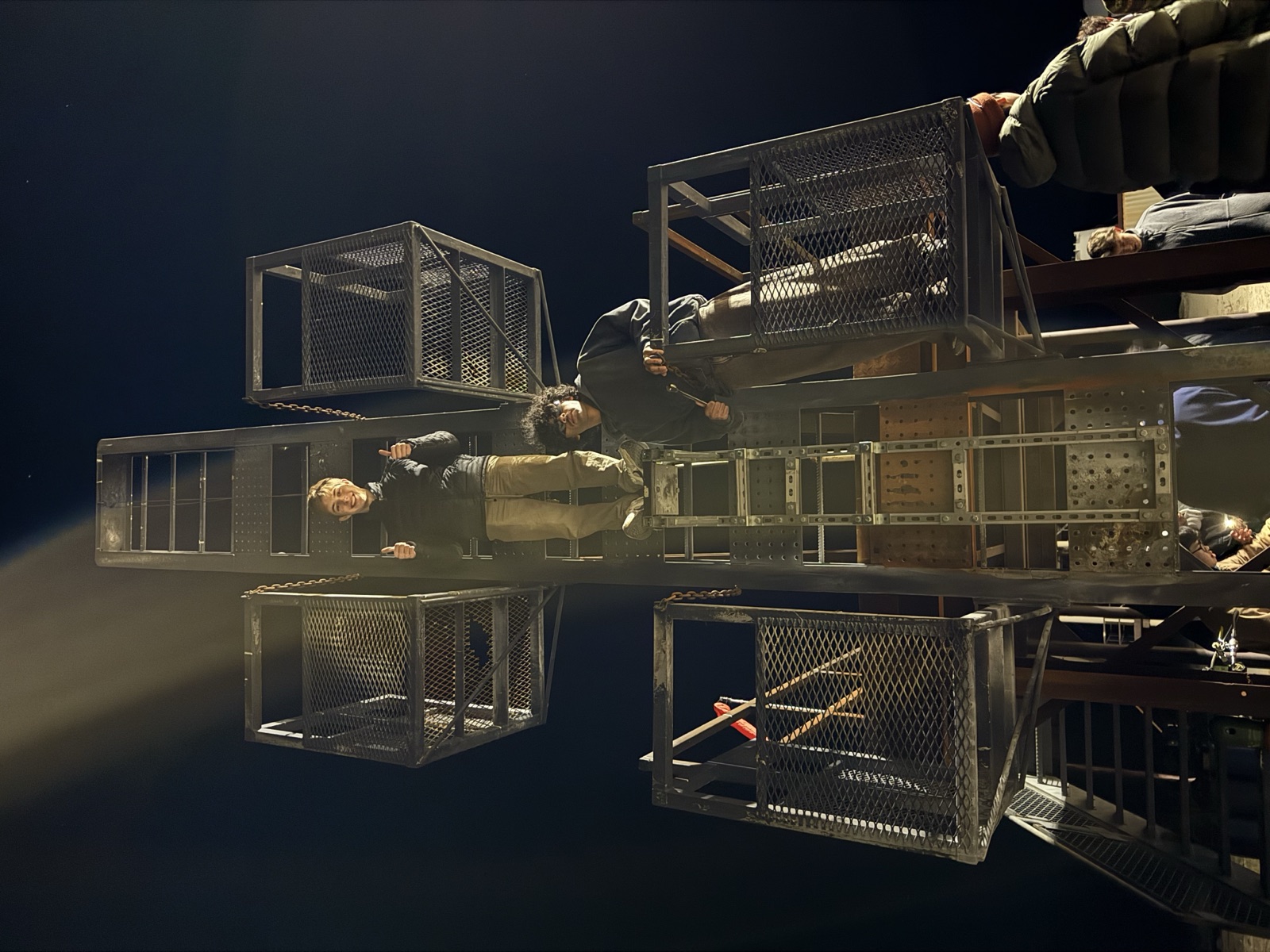
The mount completed all test events, 2 cold flows and 3 static fires, without structural failure or unplanned modification. During the campaign, I identified an issue with the oxidizer flex hose length. The hose was long and spiraling, introducing pressure losses; it was fixed.